Endangered Gliders Found Across Moreton Bay Bushland
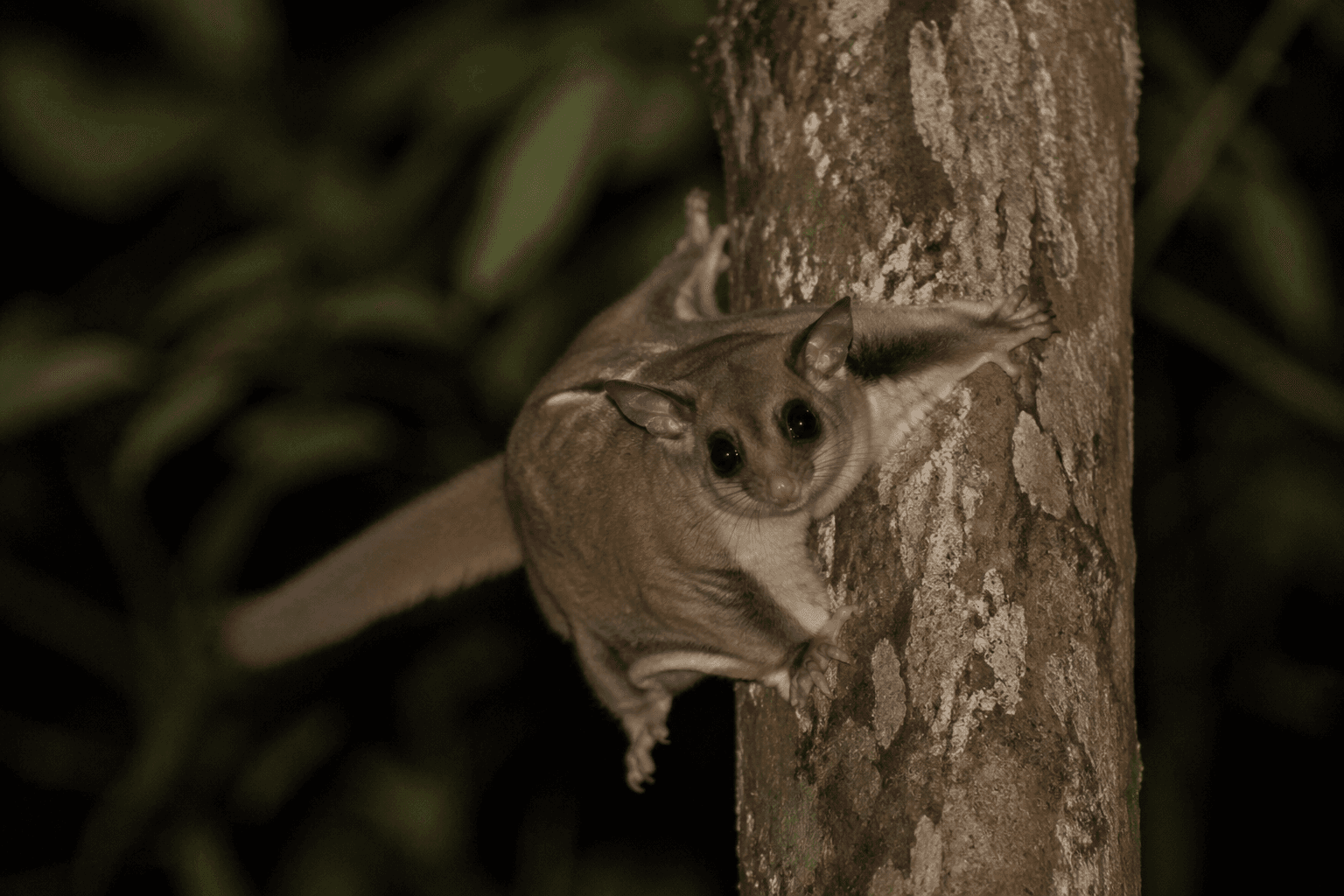

Hidden gliders quietly thriving in Moreton Bay
There’s been a pretty exciting find across Moreton Bay’s bushland, and it’s one locals can be proud of.
For years, the endangered southern greater glider was only confirmed in one spot around Upper Caboolture. Now, thanks to a detailed search effort, that story has changed in a big way.
A quiet animal that’s hard to spot
Greater gliders are one of those animals most people never see. They spend their days tucked away in tree hollows and come out at night to feed on eucalyptus leaves. They don’t make noise, and they stay high in the canopy, which makes them incredibly difficult to track.
Because of that, even areas with suitable habitat can appear empty when they’re not.
Detection dogs lead the way
Instead of relying on traditional spotting methods, the search teams used trained detection dogs to locate glider scats on the ground. It might sound simple, but it’s been a game changer.
Two dogs, Ada and Stanley, spent years working through reserves and private properties, helping identify where gliders are actually living. Once samples were found, DNA testing confirmed the species.
That effort has now confirmed gliders across multiple sites, not just one isolated area.
Moreton Bay’s glider population is bigger than expected
What started as a single known population has now grown to more than ten confirmed locations across the region.
These include areas like:
- Cedar Creek
- Cashmere
- Moorina
- Bunya
- Mount Nebo
- Mount Glorious
This tells us something important. The species hasn’t disappeared from the region, it’s just been hiding in plain sight.
Why this matters
The southern greater glider is listed as endangered in Australia, with numbers declining due to habitat loss and environmental pressures.
Finding multiple populations in Moreton Bay is a strong sign that local bushland still supports important wildlife, especially in areas with mature eucalyptus forests and tree hollows.
It also means conservation efforts here are working, and there’s now a clearer picture of where protection needs to continue.
What’s next for the search
The work isn’t stopping here. Council teams are now looking at using thermal drone technology to scan harder to reach areas where people and dogs can’t easily go.
Locals are also being encouraged to keep an eye out at night. With a torch, the gliders’ reflective eyes can sometimes be spotted high in the trees.
A reminder of what’s in our backyard
Moreton Bay has always been known for its beaches and waterways, but this is a good reminder that the bushland is just as important.
There’s a lot happening quietly out there after dark, and sometimes it just takes the right approach to uncover it.
Published:
|
Updated: