Wildlife Road Safety Network Just Won a National Award

It's not often that a local government programme gets recognised at a national level two years running, but that's exactly what's happened with the City of Moreton Bay's Green Infrastructure Network Delivery Program. The Australasian Network for Ecology and Transportation, the peak body for ecology and transportation research, has handed the programme its Project Award, acknowledging more than a decade of consistent, measurable work to keep native animals alive on the region's roads.
The programme has been running since 2014 and has grown into one of the most comprehensive wildlife road safety networks anywhere in Australia. Across more than 3,800 kilometres of roads covering suburbs including North Lakes, Narangba, Morayfield, Bribie Island and Everton Hills, the infrastructure now includes more than 47 canopy bridges, 21 kilometres of wildlife exclusion fencing, 16 fauna escape hatches and 48 wildlife underpasses. On top of that, more than 150 vehicle-activated LED signs are now in operation, lighting up in real time when animals are active in koala and kangaroo zones.
The canopy bridges are worth pausing on because they tend to surprise people. These are purpose-built rope or timber structures strung above busy roads that allow tree-dwelling animals like possums and gliders to move between habitat patches without ever touching the ground. For species that don't naturally cross open ground, a road without one of these crossings is essentially an impassable barrier. Over time, that kind of habitat fragmentation quietly reduces population numbers in ways that are hard to see until the damage is done.
The exclusion fencing works hand-in-hand with the underpasses. Rather than just hoping animals find their way across safely, the fencing channels them toward the dedicated crossing points. It's a much more deliberate approach than a warning sign on its own.
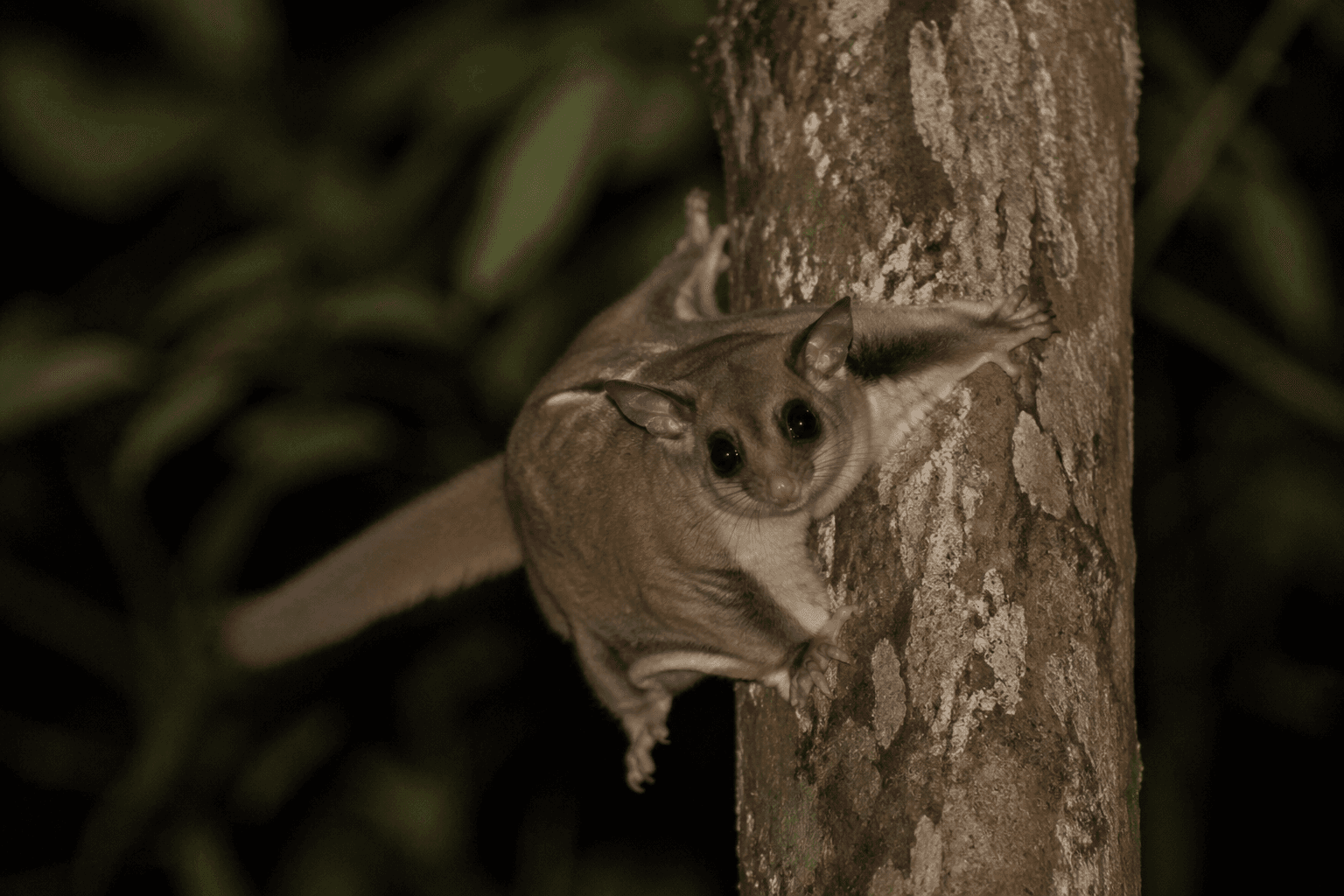
Since 2020, a permanent 4G camera network monitoring fauna structures at 14 locations across the region has recorded more than 80,000 animal crossings. That's not just kangaroos and koalas either. The cameras have captured the Brush-tailed Phascogale, a small native marsupial that doesn't get nearly enough attention, and the Feather-tailed Glider, which holds the distinction of being the world's smallest gliding mammal. The fact that these species are using the crossing infrastructure is a strong signal that the programme is working as intended.
For residents in North Lakes, Narangba and the broader growth corridors of the region, this kind of programme is directly relevant to daily life. New housing continues to push up against bushland corridors, and as more people move into the area, the pressure on wildlife to navigate roads to reach food, water and mates only increases. Infrastructure that gives animals a safer way through isn't just good for the environment. It also reduces vehicle damage and the distress of hitting an animal on the road, which anyone who's done it knows is not something you forget easily.
ANET Chairperson Rodney Van der Ree noted that the programme showed what becomes possible when different departments work together toward a shared goal, describing it as a model other councils around the country could learn from. Given that the Australian Road Safety Foundation handed the programme its Local Government Programs Award the previous year, the national recognition is now back-to-back, which says something about the quality and consistency of the work.
Residents who spot injured or distressed wildlife on or near roads can contact RSPCA Queensland on 1300 264 625 or Wildcare Australia on 07 5527 2444.
Published:
|
Updated: